
Trump's absurd justifications for annexing Greenland make no logistical sense
The idea that Russia or China would deploy forces to Greenland is, frankly, nonsense

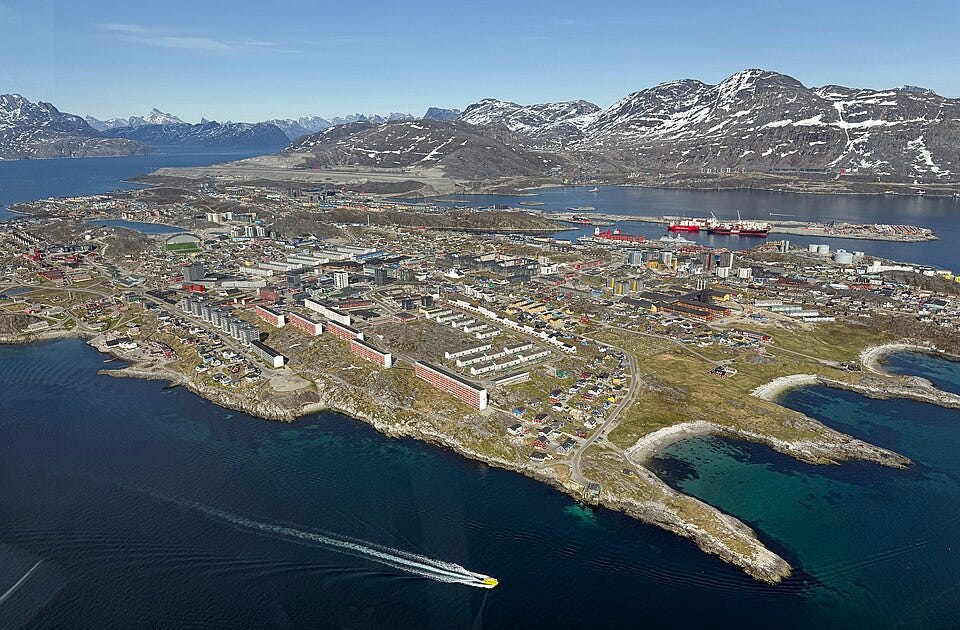
Donald Trump has offered one core argument for the “need” of the US to occupy Greenland - it is vulnerable to Russian and Chinese invasion and occupation, meaning the US must occupy it to “protect” the Western hemisphere. Aside from the blatant hypocrisy of the argument, it’s simply logistically unsound. From this, we can conclude either one of two things - first, the Pentagon is run by idiots who do not understand warfare (possible, now that the DUI hire Pete Hegseth is in charge, but still unlikely that it is entirely purged of people with a functioning brain), or second, this is simply a thinly-veiled pretext for a resource grab and theft of the large island’s considerable mineral resources.
When I was a kid, I thought warfare was all about brave soldiers battling one another from the trenches. Success is about skill, courage, and weapons. This is the vision of warfare which movies and childhood stories give us, after all. The Rebel Alliance defeated the Galactic Empire through gumption, moral legitimacy, and access to the Force. Helm’s Deep was saved by the Rohirrim slaying enough of Sauruman’s Uruk Hai in a desperate last stand. Narnia overcame the White Witch thanks to the will of the plucky children with the support of Aslan. Even historical battles are presented this way, as the victories on D-Day and at Stalingrad are largely attributed to the sacrifices of the American, British, and Soviet soldiers.
This romantic view of warfare is no doubt appealing, and of course there’s some truth to it. The beaches at Normandy and the bombed out husk of Stalingrad could not have been liberated without many young men risking (and all too often losing) their lives in the face of a ruthless foe. It also serves a useful ideological function in a militaristic society like our own, as it invites bored, ambitious, and enthusiastic young men to join the armed services.
Yet this view of warfare is, ultimately, naive and childish, and many of the youth who join the armed forces out of enthusiasm find themselves working as truck drivers and mechanics. Warfare is, first and foremost, a matter of logistics. For soldiers to land on the beaches of Normandy and advance into France, there needed to be vast fleets of Liberty and Victory ships, massive mulberry harbors, huge warehouses worth of fuel and food, and entire armies of logistical workers and mechanics. These in turn required massive shipyards and factories, farms, and even more workers, alongside a whole bureaucracy of technical experts, engineers, staff, and others to organize it all. A few brave men did the landings, but far more men (and women!) made them possible.
These logistical realities in turn depend on strategic realities. D-Day would have been impossible had the UK fallen during the Battle of Britain, and the victory at Stalingrad would have been impossible without the vast Soviet factories shipped east in the face of the German onslaught (not to mention, a lot of help from American lend-lease). To defeat the Japanese, the US needed to island hop their way across the Pacific to ensure safe supply lines. Perhaps the clearest example is how the Vietnamese defeated the US military despite rarely winning on the battlefield, in large part because their famous Ho Chi Mihn Trail meant their army in the South was never fully defeated. The list goes on.
Conversely, when these logistical realities go unaddressed, disaster looms. The French and German defeats in Russia were caused, or at least severely exacerbated, by the struggles to maintain good supply links across the Tundra and their lack of winter clothes. Japan’s attack on the US and UK was motivated by the need to keep their vast armies in China supplied, and in turn their defeat by the US was accelerated by submarine warfare cutting their supply lines. During the Peloponnesian War, Alcibiades’s Athenian warriors in Syracuse died in droves when their supply lines were cut. The defeat of the Confederate States of America was in no small part because their logistical capacity was so limited, and because they could not overcome the US blockade.
This is why the common-sense view of warfare is so naive. We see, for instance, whole internet subcultures devoted to the German wunderwaffen and superior Panzer tanks of the Second World War. Weapons like the King Tiger Tank could handily defeat any other tank of the war. Yet these tanks routinely were themselves defeated simply because they constantly broke down and the Germans struggled to fuel them. If they run out of gas and the turret breaks, the Soviet T-34s and American Shermans could still blow them up eventually.
Of course, none of this is very exciting. Nobody is going to make a movie about mechanics repairing tanks, weaving winter clothing for the soldiers in the tundra, or growing the food that feeds the army. Yet it is ultimately the deciding factor. As history progresses, this becomes only more true as weapons become more advanced and require even more sophisticated logistical systems to keep on the field.
Now, consider Trump’s claim that Russia and China are eyeing Greenland for invasion. Russia would need to use its archaic, Soviet-era navy to move an army across the Arctic Ocean and occupy Greenland in the face of opposition from the US, Canadian, and European Navies. They would then need to keep these armies supplied with adequate food, fuel, anti-aircraft weapons, and other munitions while keeping communications open. Though its navy is large, it is nowhere near as big as that of the US, and its technology is so old it has struggled to even hold the Black Sea in its fight with Ukraine. They have kept its most powerful warship, the heavy Kirov-class battlecruiser, as far away as possible to stop it from ending up like the Moskva cruiser which was sunk by Ukrainian drones. Their only aircraft carrier is currently non-operational.
China is, in theory, a more challenging menace to Greenland. It is the only navy which, in theory, could match the US in size. Though it is still smaller by tonnage, it has a comparable number of ships and can easily out-produce the US in warships in any extended war. Unlike Russia, their technology hasn’t been held back by three and a half decades of budget cuts, and is brimming with advanced missiles and two shiny new aircraft carriers (as well as one very old one it bought from the Russians). Thus, they could in theory pose a greater threat.
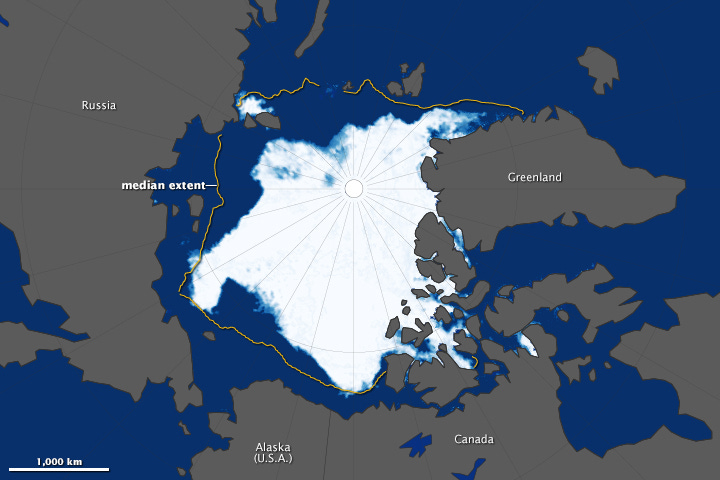
Yet China is much farther away. They would need to sail through the Bering Strait to enter the Arctic Ocean, taking them right by Alaska and making them easy targets for US forces. In doing so, they would need to maneuver past ice sheets which cover the Arctic Sea much of the year (even if they are shrinking, they are still there), and do so without the vast ice breaker fleets we see in the US and Russia. To even get to the Bering Strait, they would need to sail past a whole network of US military bases in Okinawa and the Aleutian islands. Even if they could somehow muscle their way past, everyone could see their flotilla coming well in advance and deploy forces in and around Greenland before they get there. One there, again, they would need to keep these forces supplied continually. They would do this with no significant experience at naval warfare since the Sino-Japanese war!
On top of all this, Greenland is the worst kind of terrain to fight a war. It is mostly a gigantic glacier, ringed by steep, bare mountains, with no resources or cover. The many hidden trenches on the ice sheet are incredibly dangerous for anyone who hasn’t mapped it out, as anyone who has walked on a glacier would know. Their soldiers would then need to stay warm and construct shelter from the awful weather. There would be nowhere for them to hide, and it would be almost impossible for them to move very far on land. They would be, simply put, sitting (and very cold) ducks. While Russian soldiers have some experience with such brutal conditions, China has no experience fighting in arctic conditions.
Thus, any Russian or Chinese army deployed to Greenland would be little more than human sacrifices to the gods of war and winter. They would surely get cut off and die or surrender before long. Vladimir Putin and Xi Jinping are not stupid men, and surely know all of this.
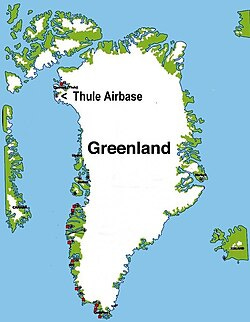
From all this, we can conclude that the strategic factors mean neither Russia nor China would invade Greenland any time soon. Even if they did, the fact that Greenland is within NATO and the US already has rights to deploy forces in Greenland due to old treaties means the US would already have the freedom to boot those forces out. In fact, they already have a very large airbase in Greenland which they could use to coordinate military action with other NATO members. Yes, Russia and China are military peers with the US (China more than Russia), but that doesn’t mean they would just throw soldiers away for no benefit. Rather, they would only challenge the US in their own back yards. There may come a time where China feels confident enough to challenge US hegemony in Latin America, but this would only ever come with the consent of local sovereign states.
Why, then, does Trump insist on this?
There are two factors. One is material, as Greenland has considerable mineral resources. While US corporations can already exploit those resources, they have to do so within the limits of local environmental regulations which protect the fragile ecosystem and health of the local Inuit, as well as paying local taxes. The US, no friend of the ecological needs, sovereignty, and cultural rights of indigenous American Indians, won’t give a damn about absolutely wrecking the lives of the Inuit (or, for that matter, the smaller Scandinavian population of Greenland). Thus, colonizing Greenland means significant economic gains for the absolute worst people in the USA.
The second one is psychological, as Trump is a gigantic narcissist who wants to join Thomas Jefferson, James Polk, and William McKinley as one of the men who grew the USA’s territorial extension. He wants to join these men as winners who extended Manifest Destiny outward. This would make the US larger than China and Canada in territory, which naturally feeds his ego.
No doubt, any invasion of Greenland would be a racist and neo-colonial moral catastrophe, and would violate all the principles of republicanism on which the US constitution is based. The Inuit already enjoy legal sovereignty and the right to secede from Denmark (or, if they hypothetically wanted to, which they don’t, vote to join the USA), and the hope of many on the island is to form an independent country once they are economically sustainable. Once the US has taken the territory, this option would be foreclosed. They enjoy universal health care and other forms of welfare entirely unfamiliar to US citizens, and do not need to worry about harassment from ICE agents like Native Americans and Polynesians living in the USA do. Thanks to their hostile environment, they need this support to live comfortable lives, and despite all this still suffer high rates of alcoholism and suicide. Consequently, the number of Greenlanders who want to become Americans and make their lives demonstrably worse is vanishingly small.
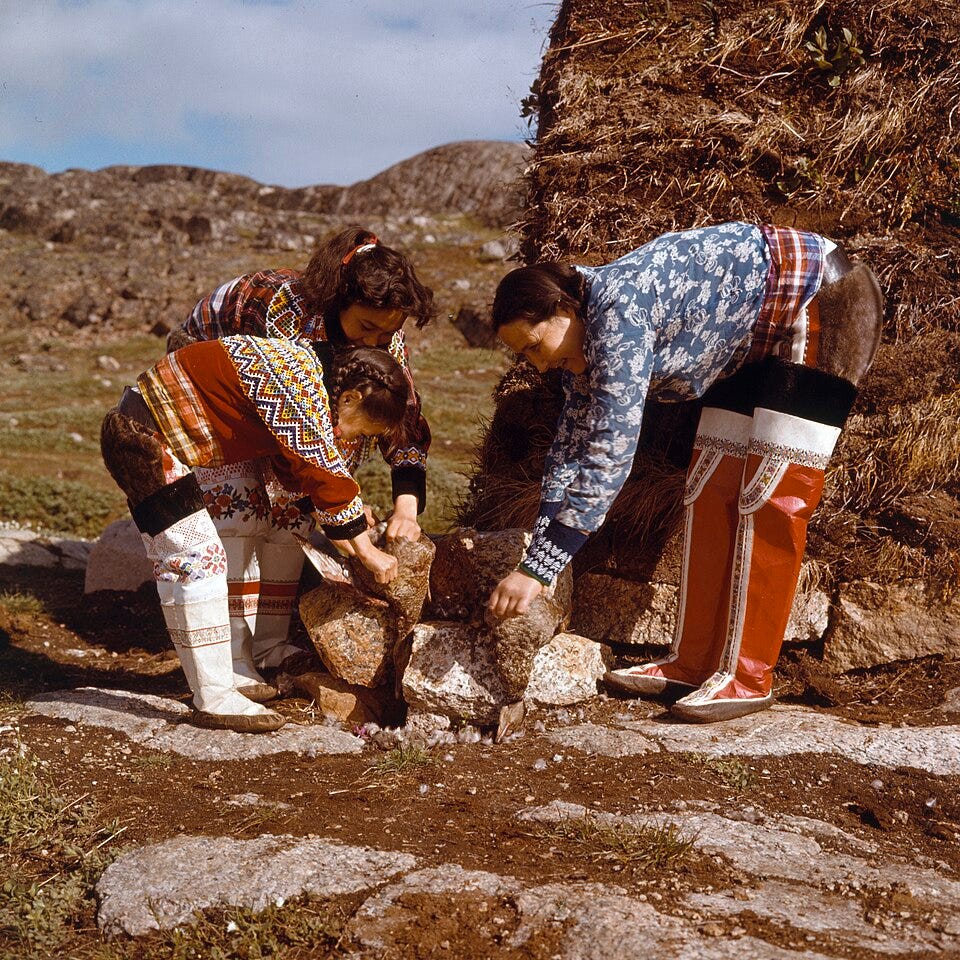
We also have to ask, what would happen to local Inuit who respond to American forces with hostility? The population is too low to sustain a significant insurgency, but some Inuit, hostile to the loss of dignity and sovereignty, would be within their rights to protest if not take up arms. What would happen if they tried to obstruct US military forces through protest? What would happen if they killed US soldiers? What would happen if the US soldiers killed them in return? It would be a 21st century Indian War nobody asked for.
It would also be a strategic blunder of epic proportions. Though the US is already effectively acting as a rogue state, violating its own “rules based international order”, violating Danish sovereignty would demolish NATO (though this may be a third reason for Trump to invade, since he clearly doesn’t care much for the alliance but lacks the courage to do it openly). The US would isolate itself from all of its powerful allies except maybe Japan and South Korea, as European powers would no longer want anything to do with the US (even if their leaders still saw some use in alignment with the US, their people surely wouldn’t). It would also fuel anti-American sentiment in Latin America and Canada, isolating the US in its own hemisphere. It might only encourage Latin American governments to seek out an open alliance with countries like China to counterbalance an aggressive, expansionist, and neo-colonial regional hegemon.
From all this, we can safely conclude that Trump’s official rationale for annexing Greenland is bogus. It’s nothing more than a thinly-veiled boondoggle and resource grab, and it is our responsibility as US citizens to ensure that the government which represents us doesn’t fool us into violating the sovereign rights of others based on lies and irrational rationales.